
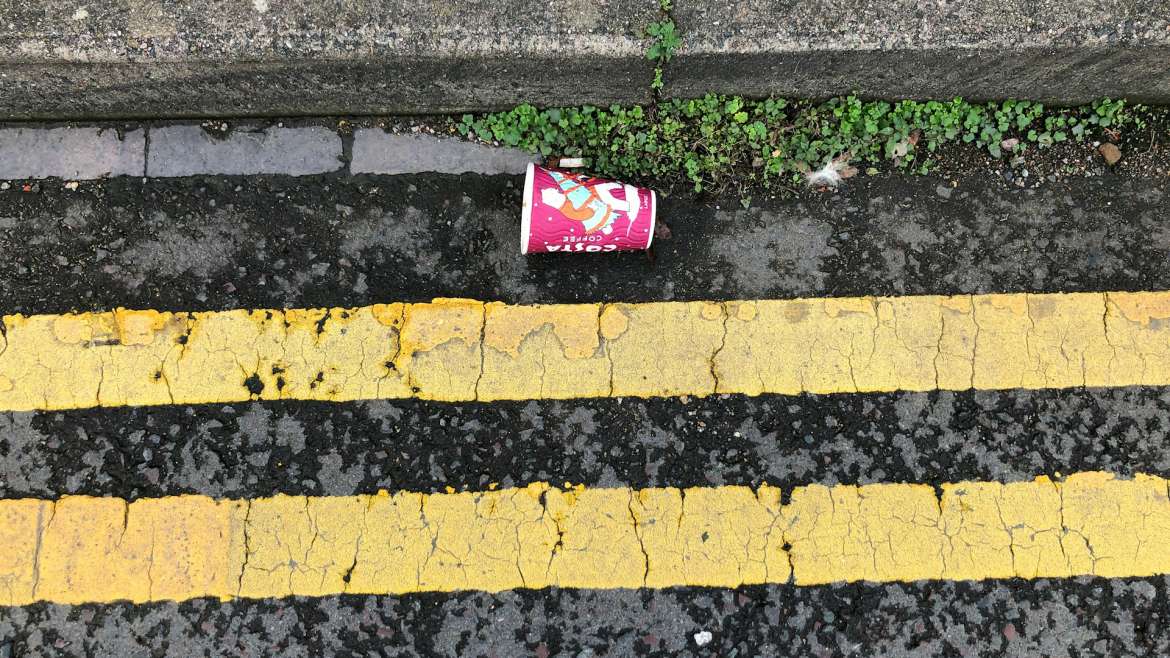
The sight of crisp packets fluttering along the central reservation, coffee cups wedged into motorway verges, and fast-food wrappers piling up at slip-road junctions is, unfortunately, one that most UK drivers know all too well. Roadside litter is not a new problem, but it is a growing one — and in 2026, the question of who should have the power to tackle it has a clear and overdue answer.
Right now, National Highways — the government-owned company responsible for maintaining England’s motorways and major A-roads — has a legal duty to keep those roads clear of litter. What it does not have is the power to fine anyone for putting it there. That enforcement gap is indefensible, and closing it cannot come soon enough.
The Scale of the Problem
Before we get into the law, it is worth taking a moment to grasp just how bad the situation has become.
A recent study by National Highways found that 22% of people now admit to littering on motorways and A-roads — a rise of nine percentage points compared with 2024. That is not a niche problem confined to a careless minority; that is roughly one in five drivers treating our roads as a bin.
Roadside litter costs around £1 billion every year to clean up across the UK, and it poses a serious safety risk, with verges and barriers forming corridors where debris builds up at an alarming rate.
On average, 83 bags of litter are collected from every mile of motorway every year, at a cost of roughly £40 per bag — approximately the same as filling a pothole. Every pound spent picking up someone else’s takeaway wrapper is a pound not spent on road safety, infrastructure improvements, or services that every taxpayer has a right to expect.
Between April 2020 and March 2022 alone, 45,000 bags of rubbish weighing 451 tonnes were collected from the M6 motorway. Think about that for a moment. Half a million bags of rubbish across two years from a single motorway. This is not a minor inconvenience — it is a national disgrace.
Keep Britain Tidy estimates that around three million pieces of litter are dropped on UK roads by motorists every weekend. And beyond the financial cost, there is a very real human and environmental toll. Over a third of people surveyed by National Highways did not consider that littering could injure or kill wildlife, with the RSPCA estimating that nearly three million animals die each year due to litter. The workers tasked with clearing this debris from live carriageways face considerable personal danger every single time they step out of the cab. They deserve better — and so do the roads they risk their lives to maintain.
Who Is Currently Responsible — and Why the System Is Broken
This is where things get complicated, and understanding the current legal landscape makes the case for change all the more compelling.
National Highways is responsible for maintaining and clearing litter from England’s motorways and major A-roads, covering around 4,300 miles of the strategic road network. However, it does not have enforcement powers against littering and cannot prosecute offenders.
Let that sink in. The organisation legally obliged to keep the roads clean has absolutely no power to punish the people making them dirty.
If an agent of National Highways spots someone littering, they must inform the local authority or other enforcement body. There is therefore a genuine gap in enforcement — one that raises serious questions about whether National Highways should also hold the power to act directly.
This arrangement is absurd in practice. A National Highways operative witnesses a driver throwing rubbish from a moving vehicle and can do precisely nothing about it in that moment. They must refer the matter to a local council, which may or may not have the resources, appetite, or jurisdiction to follow it up. Meanwhile, the litterer drives away without consequence, and the cycle continues.
Campaign group Clean Up Britain has been pushing for National Highways to be granted prosecution powers, alongside calling for litter fines to be increased to £1,000 and for six penalty points to be issued to drivers caught littering while on the move. These are not unreasonable demands. They are proportionate responses to a problem that has been allowed to fester for far too long.
In January 2024, the same group took National Highways to court over claims it was failing its statutory duty to keep England’s motorways clear of litter. The underlying message was impossible to ignore: the current system is not working, and goodwill alone will not fix it.
What the Law Currently Says — and Why It Is Still Not Enough
Under the Environmental Protection Act 1990, littering is a criminal offence anywhere in the UK. The penalties, however, have long been too weak to act as an effective deterrent — something the government has only recently begun to address.
Under new statutory guidance that came into force in March 2026, councils in England now have the power to issue on-the-spot fixed penalty notices of up to £500 for littering — including litter thrown from a vehicle. Unpaid fines double after 28 days, and where the individual offender cannot be identified, the registered keeper of the vehicle can be held to account.
If someone refuses to pay a fixed penalty notice and the matter proceeds to the magistrates’ court, they risk a fine of up to £2,500 — as well as a criminal record.
These are welcome developments. But they are only as effective as the enforcement infrastructure behind them — and on the strategic road network, that infrastructure remains dangerously thin. Councils cannot realistically deploy enforcement officers onto live motorways. The powers exist on paper; on the ground, they are largely unenforceable where they are needed most.
The March 2026 statutory guidance now applies to duty bodies including National Highways itself, with respect to its duty to keep its land clear of litter and refuse. The obligation is there. The enforcement powers are not. That contradiction needs to be resolved — urgently.
The Case for Giving National Highways Enforcement Powers
The argument in favour of granting National Highways direct enforcement powers is not just logical — it is overwhelming.
National Highways already has an operational presence across the entire strategic road network. It runs traffic officer patrols. It operates thousands of roadside cameras. It monitors hotspots, conducts nighttime sweeps, and coordinates litter interventions across thousands of miles of carriageway. Its own Customer Service Plan for 2025–2026 commits to targeted litter interventions, behaviour change campaigns, and continued partnership with Keep Britain Tidy. The organisation is doing everything it can within the current constraints. Giving it enforcement powers would simply allow it to do what it is already trying to do — with actual consequences for the people causing the problem.
On the A585 bypass in Lancashire, the installation of CCTV cameras following a surge in fly-tipping led to an immediate reduction in incidents. Technology works as a deterrent — but only when it is backed by the credible threat of a fine. Cameras that simply record, with no enforcement follow-through, send precisely the wrong message to would-be litterers.
In March 2023, fifteen MPs signed an Early Day Motion deploring the state of litter on motorways and calling on National Highways to actively seek prosecution powers. Politicians across the spectrum recognise the problem. The question is no longer whether enforcement powers are needed, but how quickly they can be introduced.
The model already exists and works elsewhere. Vehicle keeper liability — where the registered keeper of a car is fined regardless of whether the individual offender was identified — is already used for parking penalties and bus lane contraventions. Applying the same logic to littering on the strategic road network, using gantry cameras and dashcam footage as evidence, is entirely feasible. National Highways has the technology. It needs the authority.
What This Would Mean for Drivers
If National Highways were granted enforcement powers, the message to every driver would be simple and unambiguous: litter on a motorway and you will pay for it.
Higher fines, faster. Rather than waiting for a council to act on a referral, National Highways could issue fixed penalty notices directly — via post using CCTV or dashcam footage. No referral delays. No resource constraints. Just a fine through the letterbox.
Dashcam evidence counts. Fellow drivers already have a role to play. Local authorities accept dashcam footage as evidence when reporting littering from a vehicle. With National Highways holding enforcement powers, footage submitted by other road users could trigger a penalty directly — turning every dashcam-equipped vehicle into a potential witness.
Keeper liability closes the loopholes. Enforcement based on CCTV need not require identifying the exact individual who threw the rubbish. The registered keeper of the vehicle can be held responsible — a system proven to work in other areas of road enforcement and long overdue here.
Genuine deterrence. Most importantly, this would change the calculation for drivers who currently litter without any meaningful fear of consequence. The knowledge that gantry cameras, National Highways patrol vehicles, and fellow road users with dashcams could all result in a £500 fine — or a £2,500 court penalty and criminal record — is a deterrent that the current system simply cannot offer.
What You Can Do Right Now
Whether or not National Highways gains direct enforcement powers tomorrow, the rules that exist today already carry real weight — and every driver should be aware of their exposure.
If you see someone litter from a vehicle: Report it to the relevant local authority, providing as much detail as possible — the date, time, location, vehicle make and model, registration number, and a description of the litter. Dashcam footage is accepted as evidence. For incidents on National Highways roads, contact National Highways directly.
If you are tempted to litter: Don’t. A fixed penalty of up to £500 is already available to councils — and if the matter reaches court, a fine of up to £2,500 plus a criminal record is on the table. That is an extremely expensive coffee cup.
Keep a bag in your car: National Highways and Keep Britain Tidy both advocate the simple habit of keeping a small bag in your vehicle for rubbish, taking it home, and disposing of it properly. It costs nothing, takes seconds, and is frankly the bare minimum expected of any responsible road user.
The Bigger Picture for Learner Drivers
As someone learning to drive — or as an instructor shaping the habits of the next generation — there is a clear principle worth embedding from the very first lesson: the road is a shared space, and what you throw out of the window does not disappear. It lands on verges that wildlife calls home. It costs millions in taxpayer-funded clean-up. It creates genuine hazards for maintenance workers risking their lives on live carriageways.
Road etiquette is not a box to tick for the driving test and then forget. It is a commitment to the environment and to every other person who uses our roads. The sooner National Highways has the legal power to enforce that commitment — with meaningful fines for those who ignore it — the better for all of us.
Granting National Highways litter enforcement powers is not a radical proposal. It is a sensible, proportionate, and long-overdue step towards keeping Britain’s roads cleaner, safer, and something we can all take a little more pride in. The time to act is now.
What we do on the road can affect other people well beyond our own vehicle. My article on the ripple effect of driving decisions explores that responsibility.

