With heatwaves now hitting the UK harder and more often, here’s what learner drivers (and everyone else) need to know to stay safe on the road.

With heatwaves now hitting the UK harder and more often, here’s what learner drivers (and everyone else) need to know to stay safe on the road.
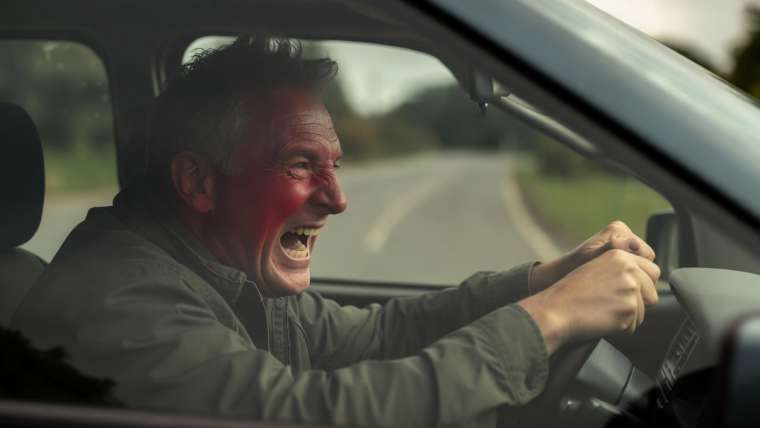
Being tailgated as a learner driver is stressful and intimidating — but it’s also illegal. Learn how to stay calm, drive safely, and handle tailgating with confidence.

A recent survey commissioned by Motorpoint revealed a startling reality about UK roads: up to half of motorists are not confident they could read a vehicle registration plate from 20 metres away. That distance isn’t just an arbitrary number; it is the legal minimum standard for driving. For a learner driver preparing to take to the road independently, your vision is your very first line of defence.

Earlier this year, the Department for Transport launched its 2026 Road Safety Strategy — a wide-ranging package of measures aimed at reducing casualties and making Britain’s roads safer. One of the centrepieces of that strategy is a massive, government-backed expansion of roadside drug testing.

The sight of crisp packets fluttering along the central reservation, coffee cups wedged into motorway verges, and fast-food wrappers piling up at slip-road junctions is, unfortunately, one that most UK drivers know all too well. Roadside litter is not a new problem, but it is a growing one — and in 2026, the question of who should have the power to tackle it is becoming increasingly urgent.

New CPR and AED questions are now live in the DVSA theory test — here’s everything learner drivers in the Chilterns need to know Somewhere on a road near you, a driver will collapse at the wheel. A cyclist will be struck at a junction. A pedestrian will suffer a cardiac arrest on the pavement. And statistically, the person closest…

Starting this month, the driving theory test got a lot more serious — and for very good reason. The Driver and Vehicle Standards Agency (DVSA) has introduced 14 new questions focused on first aid, cardiac arrest, and the use of automated external defibrillators (AEDs). If you’re a learner driver preparing for your theory test right now, this update affects you…

This article explores the neuroscience of learning to drive — and why understanding it might be the single most useful thing a learner driver can do before their next lesson.

The driving test has always been a nerve-wracking experience. But in 2026, we’re witnessing an unprecedented shift: for the first time, psychological barriers are overtaking technical skills as the primary reason learners fail their practical examination.

From early 2026, the Driver and Vehicle Standards Agency (DVSA) is introducing questions on cardiopulmonary resuscitation (CPR) and automated external defibrillators (AEDs) for the first time in the test’s history.