
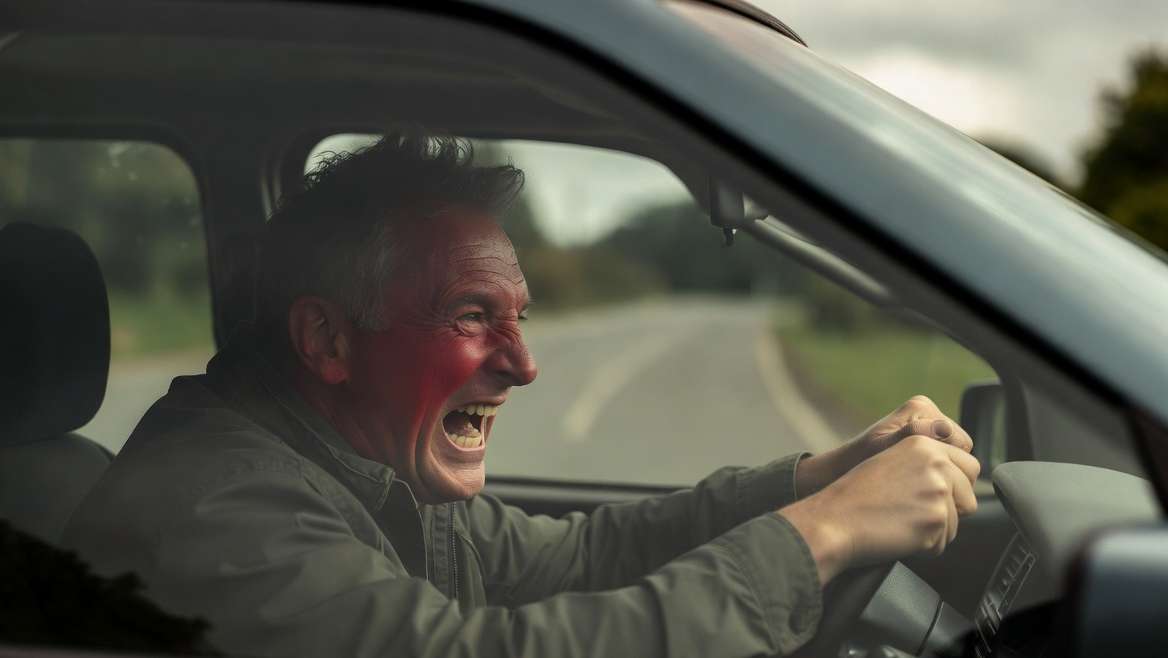
You’re doing everything right. You’re driving at a safe speed, keeping your distance from the car ahead, checking your mirrors — and then you notice it. A car has crept up close behind you. Very close. Uncomfortably close. And it’s staying there.
Your heart rate ticks up. Your hands tighten on the wheel. Suddenly, instead of concentrating on the road ahead, your eyes keep flicking to the rearview mirror.
If this sounds familiar, you’re far from alone. Being tailgated is one of the most unsettling experiences for any driver — but for learner drivers, it can feel genuinely frightening. The good news is that there are practical, calm, and safe ways to deal with it. Let’s walk through them together.
Tailgating is illegal in the UK. Rule 126 of the Highway Code requires drivers to always leave sufficient distance from the vehicle in front, and driving dangerously close to another vehicle can be prosecuted as careless or inconsiderate driving under the Road Traffic Act 1988. Police can issue an on-the-spot fixed penalty notice of £100 and three penalty points — and in more serious cases, the matter can go to court, where fines can reach £5,000 and a driving ban is possible. It’s worth knowing this not to feel smug about it, but because it genuinely helps your mindset: you are the one driving legally and responsibly. The driver behind is the one breaking the law.
First of All: It’s Not Your Fault
Before anything else, take a breath and remind yourself of something important: tailgating is the other driver’s problem, not yours.
Drivers tailgate for all sorts of reasons — they’re running late, they’re frustrated, they’re simply not paying attention, or (let’s be honest) they’re being a bit of a bully on the road. When they see an L-plate, some drivers assume they can pressure a learner into speeding up or getting out of the way.
You don’t have to play along. You are not obliged to drive faster than is safe or comfortable. The Highway Code is on your side.
What Not to Do
When someone is sitting on your bumper, your instincts might push you towards one of two reactions — and unfortunately, both can make things worse.
Don’t speed up. It’s tempting to ease off the brake and let the speedometer creep upwards just to give the car behind a bit more room. But driving faster than you’re comfortable with, or faster than conditions allow, puts you at greater risk. Speed doesn’t make a tailgater go away — it just adds a new danger to the situation.
Don’t brake suddenly. This might cross your mind if the frustration builds, but sharply hitting the brakes with a car that close behind you is genuinely dangerous. It could cause a rear-end collision, and you’d both be dealing with the aftermath.
Neither panic nor retaliation serves you here. Steady and calm does.
What You Should Do
Increase Your Following Distance
This is the single most useful adjustment you can make. Increase the gap between you and the vehicle in front of you.
Why? Because if something happens ahead and you need to brake, you want the stopping process to be as gradual and controlled as possible. A larger gap means you can slow down more gently, reducing the chance that the car behind runs into you. It also means you’re less likely to need to brake sharply at all, which keeps everyone safer.
Use the two-second rule in normal conditions, or the four-second rule in wet weather — and if someone’s tailgating, adding a little extra space on top of that is wise.
Maintain a Smooth, Consistent Speed
Erratic speed changes are dangerous when a car is following too closely. Try to keep your speed as even as possible — no sudden acceleration, no sudden deceleration. Smooth driving gives the tailgater the best chance of reacting safely, and it keeps you in control.
Stay at the Correct Speed for the Conditions
Don’t be bullied into driving faster than the speed limit or faster than is safe. If you’re on a 30mph road and doing 30mph, you are doing exactly the right thing. A flashing headlight or an impatient driver behind you does not change the law, and it does not change what is safe.
Let Them Pass When It’s Safe to Do So
If you’re on a single carriageway or a road where it’s possible, and there’s a safe, legal opportunity to let the vehicle behind you pass — take it. You might be able to slow gently and pull into a lay-by, a wider section of road, or turn off your route briefly.
This isn’t about backing down. It’s about removing a hazard from behind you and getting on with your drive in peace. Once a tailgater has passed, the problem is usually gone.
You are under no obligation to do this — but if it’s convenient and safe, it’s often the simplest solution.
Keep Monitoring Your Mirrors
You should be checking your mirrors regularly anyway, but when someone is tailgating, you need to be particularly aware of what they’re doing. Are they moving closer? Are they indicating to overtake? Are they backing off?
Don’t obsess over the mirror to the point where you’re no longer watching the road ahead — that would be dangerous. But do factor them into your regular observation routine. Awareness is everything.
The Mindset That Will See You Through
Driving is as much a mental skill as a physical one, and handling a tailgater well is almost entirely about getting your head in the right place.
Separate their behaviour from your driving. What that driver is doing behind you is their choice and their responsibility. Your job is simply to drive safely. Those are two completely different things happening at the same time.
Avoid getting drawn into their energy. Aggression and impatience are almost contagious on the road — it’s easy to absorb the tension of the person behind you and let it affect your decisions. Consciously resist this. They are in a rush. You don’t have to be.
Remind yourself of your goal. Your goal, on every drive, is to arrive safely. That’s it. Not to prove a point, not to react to provocation, not to perform for the driver behind. Just to arrive safely.
Breathe. It sounds almost too simple, but conscious, slow breathing genuinely helps regulate the stress response. If you feel your chest tighten or your shoulders creep up around your ears, take a deliberate breath and let your shoulders drop. You’ll think more clearly for it.
A Word on Lesson Drives vs. Solo Practice
If this happens during a driving lesson, tell your instructor straight away. That’s exactly what they’re there for. An experienced instructor will know how to handle the situation calmly, and they may well take control of the dual controls if needed. You won’t be judged for flagging it — you’ll be praised for your awareness.
If you’re on a supervised practice drive with a parent or other accompanying driver, the same applies. Speak up. Let them know what you’re experiencing. A good accompanying driver will help you talk through it in the moment and debrief afterwards.
You’re Learning — and That’s Something to Be Proud Of
Driving alongside L-plates takes courage. You’re doing something new, in public, under pressure, while trying to absorb an enormous amount of information all at once. The fact that you’re also having to manage inconsiderate drivers on top of all that is genuinely unfair.
But every time you handle a moment like this calmly and safely, you’re building exactly the kind of resilience that makes a great driver. The ability to stay composed when someone else is behaving badly is not a small thing — it’s a skill that will serve you for the rest of your driving life.
Keep going. You’re doing brilliantly.
Always follow the Highway Code and drive to the conditions of the road. If you feel unsafe at any point, it’s acceptable to find a safe place to stop and take a moment to compose yourself before continuing.
Keeping calm around other drivers is part of defensive driving. My introduction to defensive driving explains how to plan ahead and manage risks.

