
Picture the scene. You are sitting in the driver’s seat for the very first time. Your instructor asks you to find the biting point. Your left foot trembles on the clutch, your right hovers over the accelerator, your hands grip the wheel as though the car might otherwise make a bolt for freedom — and then, in a moment of glorious humiliation, the engine stalls. You feel stupid. You feel hopeless. You wonder, privately, whether there is something fundamentally wrong with you.
There is not. In fact, what you are experiencing in that precise moment is one of the most extraordinary biological processes in the known universe: your brain is physically rebuilding itself.
Not metaphorically. Not as a manner of speaking. Literally, structurally, at the level of individual cells and the connections between them, your brain is undergoing measurable physical change every single time you sit behind the wheel and practise.
This article explores the neuroscience of learning to drive — and why understanding it might be the single most useful thing a learner driver can do before their next lesson.
The Brain Is Not a Hard Drive
Most people think of learning the way saving a document to a computer works: the information goes in, it gets stored somewhere, and the job is done. If only it were that simple.
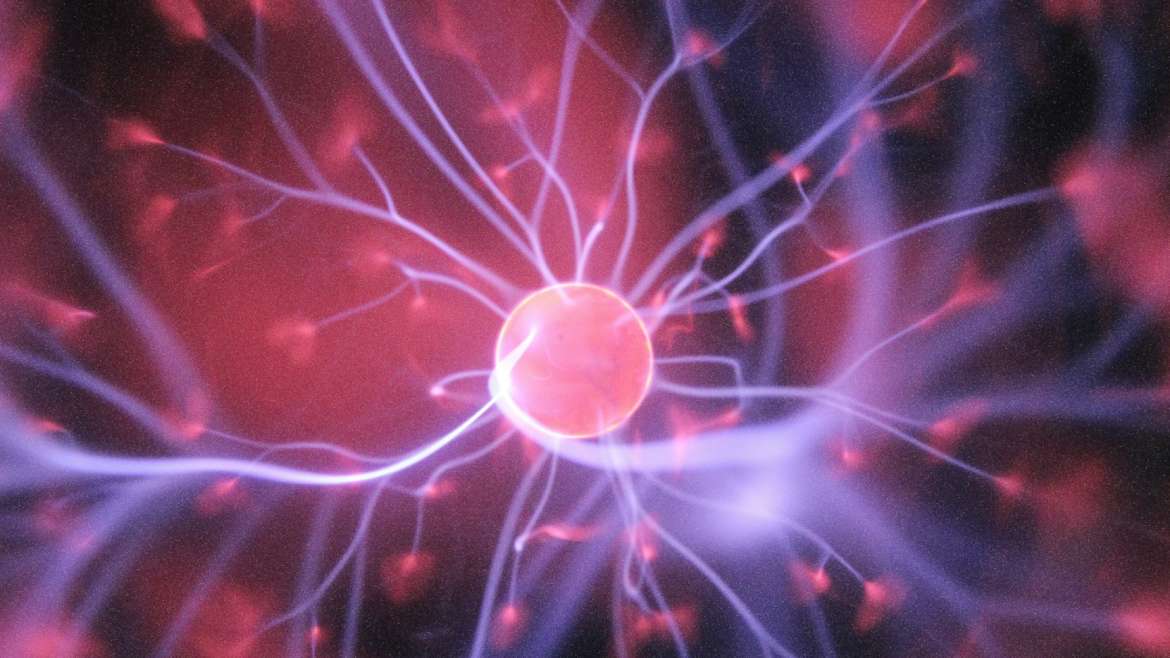
The brain does not store information in neat little files. Instead, it forges physical connections between billions of microscopic cells called neurons. When you learn something new — any new skill, from playing the piano to parallel parking — those neurons must connect to one another in new ways. The learning is the connection. The skill is the pathway.
This is not a fixed process. The brain is, to use the scientific term, plastic — meaning it has an astonishing capacity to change its own structure throughout your entire life. The formal name for this is neuroplasticity, and it is the single most important concept you will ever encounter as a learner driver.
For decades, scientists believed the brain was largely fixed by the time we reached adulthood. We now know this is completely wrong. The adult brain remains capable of extraordinary structural change — and nothing demonstrates this more clearly than the process of learning a complex, multi-layered physical skill like driving.
Learning to drive is one of the richest neurological workouts a human being can undertake. It simultaneously demands visual processing, spatial awareness, motor control, hazard perception, decision-making, memory recall, and emotional regulation — often all at the same moment. It is, in the most literal sense, brain-building.
The Tall Grass: How Neural Pathways Actually Form
The clearest way to understand what happens inside your brain during a driving lesson is through an analogy that neuroscientists and educators alike reach for repeatedly: the field of tall grass.
The first lesson. Imagine your brain as a vast, overgrown field. The grass is deep, wild, and tangled — a landscape with no clear paths through it. When you attempt a new skill for the first time — finding the biting point, co-ordinating the clutch and accelerator, steering whilst simultaneously checking your mirrors — you are trying to walk through that field for the very first time. It is slow. It is exhausting. You have to physically push through the resistance of the grass with every single step. This is why a first driving lesson feels so overwhelming. Your brain is spending enormous quantities of energy trying to force signals through neural territory that has never been traversed before.
Repetition: trampling the path. Now imagine you do the same journey again. And again. The grass begins to flatten. A faint trail appears. It is still not easy, but you are no longer fighting your way through from scratch. The path is beginning to exist. This is what happens every time you practise a manoeuvre. Each repetition reinforces the connection between the relevant neurons. The signal travels the same route again, and in doing so makes that route easier to travel next time. This is why instructors encourage you to practise. They are not being obsessive. They are asking you to trample down the grass.
Mastery: the paved superhighway. Continue for long enough, and something remarkable happens. The faint trail becomes a dirt track. The dirt track becomes a paved road. The road becomes, eventually, a motorway — a broad, smooth, high-speed corridor along which signals can travel almost instantaneously. This is the moment when driving stops feeling hard. When you see a hazard and your foot is already moving to the brake before your conscious mind has finished processing what it saw. When changing gear becomes as natural as breathing.
There is, however, a crucial corollary to this analogy that every learner driver needs to hear: if you stop practising, the grass grows back. Neural pathways that are not reinforced will gradually weaken over time. The brain, extraordinarily efficient organ that it is, does not maintain infrastructure it no longer uses. This is why learners who have long gaps between lessons often feel as though they have forgotten everything. They have not forgotten exactly — but the path has begun to overgrow, and they must re-trample it.
The Science: Myelin and the 200 mph Signal
The tall grass analogy is useful, but the underlying biology is even more extraordinary. To understand it properly, we need to look at what is actually happening at a cellular level.
Neurons: the messengers
Your brain contains approximately 86 billion neurons — nerve cells that communicate with one another by sending electrical and chemical signals across tiny gaps called synapses. When you learn a new skill, you are encouraging specific neurons to fire together, strengthening the connections between them. Neuroscientists summarise this with the phrase: neurons that fire together, wire together.
In the early stages of learning, the relevant neural connections are weak and newly formed. The signal that travels between them is slow and somewhat unreliable — like trying to make a phone call on a very poor connection. The message gets through, but it stutters, and it requires a great deal of effort. This is why beginner drivers feel genuinely, physically exhausted after a one-hour lesson. They are not merely processing information — they are constructing new infrastructure. The brain uses glucose as its primary fuel, and building new neural connections demands it in significant quantities.
Myelin: the game-changing insulator
Here is where it gets genuinely astonishing. As you continue to practise, your brain does not merely strengthen the connection between neurons — it goes a step further and insulates it.
The insulating substance is called myelin — a white, fatty material produced by specialised cells called oligodendrocytes. Myelin wraps itself around the long, wire-like part of a neuron in tight layers, exactly like the rubber insulation around an electrical cable. The effect on signal speed is dramatic:
- An uninsulated nerve fibre transmits a signal at approximately 2 mph — roughly the pace of a slow walk.
- A fully myelinated nerve fibre transmits a signal at approximately 200 mph — roughly the speed of a high-speed train.
This process — myelination — is one of the primary mechanisms by which practice converts conscious effort into automatic behaviour. The more you practise, the more myelin is laid down. The more myelin, the faster and more reliable the signal. The faster the signal, the less conscious effort is required to produce the correct response.
This is the biological basis of what we casually call “muscle memory” — though it is worth noting that the memory itself resides in the brain, not the muscles. A more accurate term would be myelinated memory.
Why white matter matters
You may have heard of grey matter and white matter. These are not merely colloquial terms. Grey matter refers primarily to the cell bodies of neurons — the processing centres. White matter refers to the myelin-coated axons — the high-speed communication pathways. When you practise a skill extensively, you are quite literally increasing the proportion of white matter associated with that skill. Experienced drivers have measurably different white matter structures in certain brain regions compared to non-drivers. You can see it on a brain scan.
The Four Stages of Learning: A Framework That Makes Sense of Everything
There is a well-established psychological framework that describes the four stages through which any learner passes when acquiring a new skill. For driving, it is particularly illuminating.
Stage 1 — Unconscious incompetence. You do not know what you do not know. Before your first lesson, you had no real sense of how complex driving actually is. You assumed you would more or less be able to do it.
Stage 2 — Conscious incompetence. The lights come on and reveal the full extent of what you cannot yet do. You are acutely, painfully aware of every mistake. This is the stage most learners find most demoralising. It is also, neurologically speaking, the most productive stage: your brain is building pathways at its greatest rate.
Stage 3 — Conscious competence. You can do it, but you have to concentrate. Changing gear no longer requires all of your attention, but it does require some. The grass is flattened; the path exists. You are walking it deliberately and carefully.
Stage 4 — Unconscious competence. It simply happens. The response is automatic. The signal travels down a myelinated motorway at 200 mph and the behaviour occurs before conscious thought catches up. This is mastery.
The discomfort of Stage 2 is not a sign that you are failing. It is a sign that your brain is working. The difficulty is the construction process. Understanding this does not make it feel less hard, but it does make it feel less personal.
The Role of Sleep: Where the Real Consolidation Happens
Here is something many learner drivers never hear: a significant portion of the neural consolidation that follows a driving lesson does not happen during the lesson itself. It happens while you are asleep.
During the deeper stages of sleep — particularly slow-wave sleep and REM sleep — the brain performs a kind of overnight maintenance operation. Skills and experiences encountered during the day are replayed, sorted, and consolidated into longer-term memory structures. The tentative connections forged during the lesson are reinforced. Newly laid myelin has a chance to mature and stabilise.
This has very practical implications. A lesson on Saturday morning that is followed by a good night’s sleep will, all else being equal, produce better long-term skill retention than a lesson followed by a late night or excessive alcohol. Your instructor may not mention this. The research is unambiguous about it.
If you want to accelerate your progress, treat sleep not as a passive recovery tool but as an active component of your learning. It is during those hours of unconsciousness that your brain is quietly finishing the work your lesson started.
Stress, Cortisol, and Why Anxiety Makes Learning Harder
There is one more piece of the neurological puzzle that learner drivers rarely discuss, but which has an enormous practical impact: the effect of stress hormones on the learning brain.
When you feel anxious — before a lesson, when approaching a busy junction, when a lorry comes a little too close for comfort — your brain releases a hormone called cortisol. In small quantities, cortisol is helpful. It sharpens focus and prepares you to respond to a threat. But in large quantities, or when it is chronically elevated, cortisol actively impairs the brain’s ability to form new memories and build new neural pathways.
In other words, if you are very anxious during a lesson, you are making it harder for the lesson to stick. The grass-trampling becomes less efficient. The myelin lays down more slowly.
This is one of the strongest neurological arguments for choosing a driving instructor with whom you feel genuinely comfortable, for taking breaks when you feel overwhelmed, and for not catastrophising mistakes when they happen. Every learner stalls. Every learner misjudges a gap. Every learner has a lesson that feels like a complete disaster. These moments are not evidence of failure; they are evidence of being at Stage 2, which is exactly where the learning happens.
A good instructor does not just teach you to drive. They manage your cortisol.
Practical Exercises to Strengthen Your Neural Pathways
Understanding the science is one thing. Applying it is another. Here are several evidence-based approaches to making each lesson — and the time between lessons — count for more.
Mental rehearsal. Neuroscience research has consistently found that vividly imagining performing a skill activates many of the same neural pathways as physically performing it. In the days between lessons, spend five or ten minutes sitting quietly and mentally walking through a manoeuvre that is giving you difficulty. Visualise it in detail — the position of your hands, the feel of the clutch, the moment you check the mirror. You are trampling the grass even without getting in a car.
Spaced repetition rather than cramming. The brain consolidates skills better when practice is distributed across multiple sessions rather than concentrated into one marathon effort. Two one-hour lessons per week will typically produce faster progress than one two-hour lesson, not because of the total time but because of the sleep consolidation that occurs between them.
Narrate what you are doing. Talking through a manoeuvre as you perform it — “mirror, signal, manoeuvre; checking my right mirror, indicating now, easing off the gas” — engages additional language-processing areas of the brain alongside the motor areas. This multi-channel engagement can accelerate pathway formation.
Prioritise sleep the night after a lesson. As discussed above, this is when consolidation happens. Protect it.
Be kind to yourself after mistakes. Ruminating on errors whilst still in the car elevates cortisol and reduces the brain’s openness to new learning. Acknowledge the mistake, understand what went wrong, and move on. Your instructor will not remember it by next week. Your brain, given the chance, will quietly correct it during the night.
What This Means for Roundabouts, Parallel Parking, and Everything Else That Feels Impossible
Almost every learner driver has at least one manoeuvre that feels categorically beyond them. For many people it is parallel parking. For others it is roundabouts, reversing round a corner, or joining a dual carriageway. Whatever yours is, the neuroscience offers a consistent message: the feeling of impossibility is not a verdict. It is a description of your current level of myelination.
The reason certain manoeuvres feel harder than others is that they require the co-ordination of multiple neural pathways simultaneously. Parallel parking, for example, requires spatial reasoning, fine motor control of the steering wheel, careful speed management of the clutch, and the simultaneous monitoring of multiple reference points and mirrors — all at once, all in real time. Each of those elements has its own neural pathway that must be built and myelinated. And they must eventually work in concert with one another, which requires yet more connections.
The solution is always the same: break the manoeuvre into its component parts, practise each part separately until it reaches Stage 3 or Stage 4, and then gradually combine them. You are not learning one skill. You are building multiple pathways and then teaching them to communicate. That takes time. It takes repetition. And it takes the patience to stay in the tall grass long enough for it to flatten.
A Final Word: You Are Not Struggling. You Are Building.
The learner driver who stalls at the traffic lights, who forgets to check the blind spot, who takes the wrong exit at the roundabout, is not failing. They are at Stage 2. They are in the tall grass. They are doing the thing that must be done before any of the rest of it becomes possible.
Every driving instructor has watched thousands of learners pass through the same stages, make the same mistakes, experience the same crises of confidence, and then — because they kept going — emerge on the other side into unconscious competence. It happens every time, for virtually every learner, because it is not a matter of talent. It is a matter of neurobiology. If you repeat the behaviour, the brain builds the pathway. That is not a motivational slogan. It is a biological fact.
So the next time you stall, misjudge the gap, or come off a roundabout feeling utterly defeated, remember what is actually happening inside your skull. You are not proving that you cannot drive. You are trampling down the grass. You are laying the first threads of myelin along a pathway that — if you keep going — will one day carry a signal so fast that the whole business will feel effortless.
Keep driving. The highway builds itself.
TL:DR: The short version: your brain physically builds new connections between nerve cells every time you practise. It then insulates those connections with a substance called myelin, which speeds up the signal from roughly 2 mph to 200 mph. That is the biological reason driving eventually becomes automatic — it is not willpower or talent, it is repetition creating physical infrastructure in your brain.

