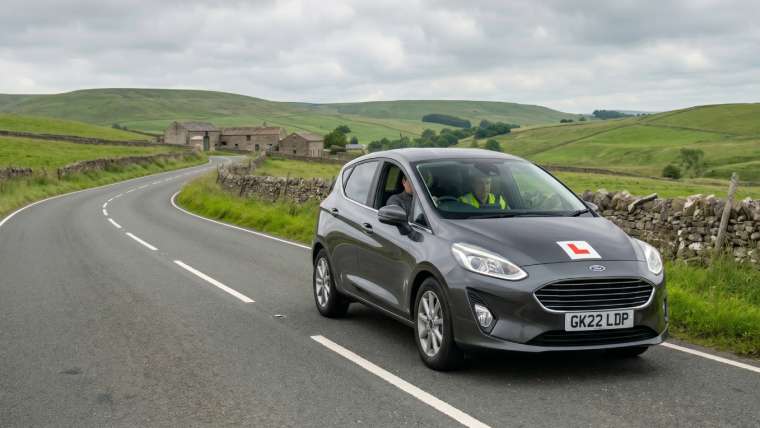
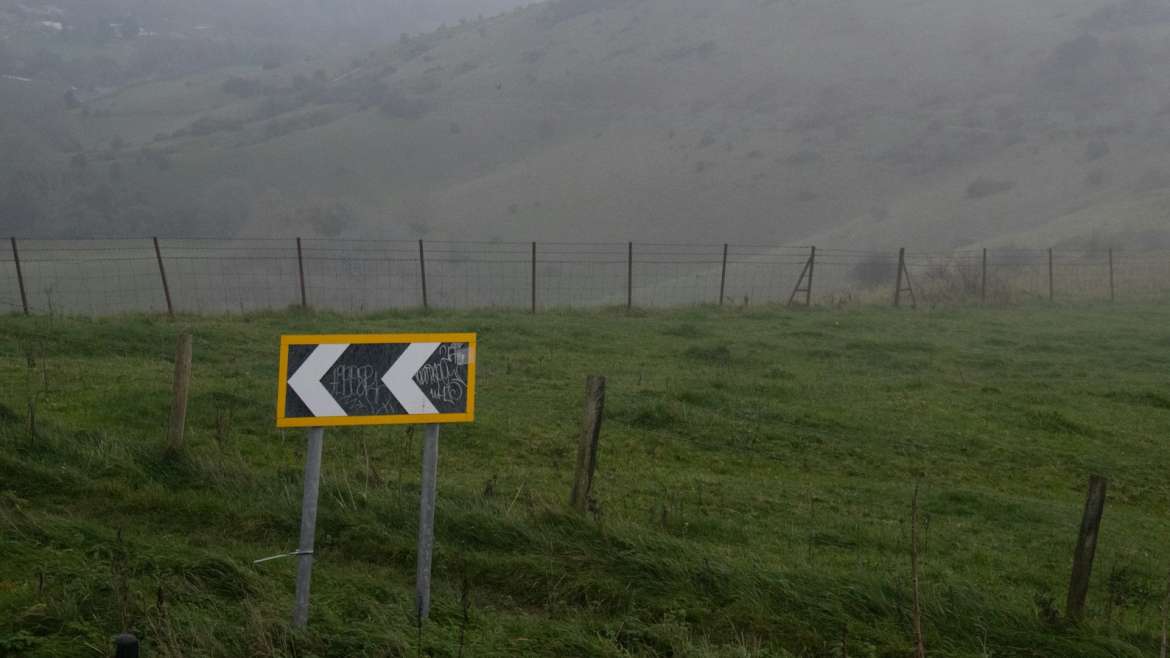
Road safety campaigns come and go, but every so often a pair of them lands that genuinely makes you stop and think. This month, Infrastructure Minister Liz Kimmins launched two new campaigns — Priority List and Control — that tackle two of the most persistent killers on UK roads: driver inattention and rural speeding. As a driving instructor, I want to talk about both of them in detail, because the messages at their heart are ones I reinforce in every single lesson I deliver.
Whether you are a learner driver just finding your feet behind the wheel, or an experienced motorist who has been driving for decades, these campaigns have something important to say to you.
Why These Campaigns Matter Right Now
The statistics behind UK road deaths make for uncomfortable reading. Roads that feel familiar, journeys that feel routine, and moments of distraction or overconfidence that last no more than a second or two — these are the ingredients of tragedies that devastate families and communities every year.
What makes Priority List and Control particularly striking is that they do not try to frighten people with abstract statistics alone. Instead, they zoom in on something much more human: the split-second decision. The moment where a driver chooses — consciously or not — to glance at a phone, to hold their speed on a narrow country lane, to assume nothing can go wrong. These campaigns ask drivers to confront that moment honestly, and to think about what — and who — is really at stake.
‘Priority List’: Putting Down Distraction for Good
What the Campaign Is About
The Priority List campaign addresses driver inattention and the dangerous habit of allowing in-car distractions — particularly mobile phones — to compete with the road for a driver’s attention. The name itself is pointed: it asks you to consider your actual priority list when you are behind the wheel. Spoiler — nothing on that list should come before the safe management of your vehicle and the road ahead.
The Scale of the Problem
Distracted driving is not a new issue, but it remains stubbornly lethal. Using a handheld mobile phone at the wheel has been illegal for years, yet enforcement data and collision investigation reports consistently show that inattention remains a leading factor in road deaths and serious injuries. And it is not just phones. Distraction takes many forms: adjusting a sat-nav, reaching for something on the passenger seat, eating and drinking, being lost in thought, or attending to children in the back. The common thread is the same — attention has drifted away from the task of driving.
For learner drivers, this is particularly worth understanding from the outset. When you are learning, the mental demand of driving is already high. You are consciously processing things that experienced drivers do more automatically — mirror checks, steering inputs, speed management, hazard perception. Adding any distraction to that cognitive load is genuinely dangerous, not just inadvisable.
What It Means in Practice
As an instructor, I talk about the concept of attentional capacity with my pupils. Your brain has a finite amount of processing power to dedicate to any task. Driving — real, safe, competent driving — demands a significant portion of that capacity. Every time you introduce a secondary task, you are borrowing from a budget that does not have much spare.
Research into reaction times illustrates this vividly. At 30 mph, a car travels roughly 13.5 metres every second. If a distraction causes even a one-second delay in your reaction to a hazard ahead, you have already covered the length of a bus before you have even begun to brake. At higher speeds, that figure climbs rapidly.
The Priority List campaign asks drivers to make a deliberate, pre-journey commitment: the road comes first. Not the message that just arrived. Not the call you are waiting for. Not the half-eaten sandwich on the passenger seat. The road.
A Message for Learners
If you are currently learning to drive, you have an extraordinary opportunity here. You are building habits right now that will shape how you drive for the rest of your life. Normalising a phone-free, distraction-free driving environment from day one means you never have to un-learn bad habits later. Put the phone in the glovebox before you start the engine. Make it a ritual.
‘Control’: Tackling the Rural Speeding Crisis
What the Campaign Is About
The Control campaign — sometimes referred to in coverage as Control or Speed — targets a specific and deadly phenomenon: speeding on rural roads. It confronts drivers with a direct question about what they actually control when they choose to drive too fast on country lanes and rural A-roads, and what they lose control of when things go wrong.
Rural Roads: The Deadliest Part of Our Network
This may surprise some drivers, but rural roads are disproportionately dangerous compared to motorways and urban streets. Department for Transport data consistently shows that around 55–60% of road fatalities in Great Britain occur on rural roads, despite them carrying far less traffic than urban routes.
The reasons are not hard to understand when you think them through. Rural roads are often narrow, with no central reservation and no barrier between opposing lanes of traffic. Visibility can be severely restricted by hedgerows, dips, bends, and crests. Road surfaces may be less well-maintained. Junctions appear with little warning. Farm vehicles, cyclists, horse riders, and pedestrians share the same road space. And crucially, the national speed limit of 60 mph applies to most single-carriageway rural roads — a limit that is frequently unsafe given the actual conditions.
The Control campaign targets the mindset that the speed limit is a target. It challenges drivers to ask whether the speed they are travelling at gives them genuine control — sufficient stopping distance, sufficient time to respond to what they cannot yet see — rather than simply sitting at or below the posted limit.
The Limit Point and Why It Matters
One of the things I teach in lessons is the concept of the limit point — the furthest point along the road ahead to which you have a clear, unobstructed view. On a rural road, the limit point moves constantly. On a long straight, it may be hundreds of metres ahead. On a tight bend, it may be just a few car lengths in front of you.
Safe rural driving means constantly reading the limit point and adjusting your speed so that you could stop comfortably within the distance you can see to be clear. If you cannot stop within that distance, you are, by definition, out of control — even if you are driving within the legal speed limit.
This is precisely what the Control campaign is driving at. A driver doing 55 mph on a rural road with a 60 mph limit, approaching a blind bend, is not driving safely. They have relinquished control in exchange for speed, and they may not get it back in time.
The Human Cost
Rural road deaths are not statistics in isolation. They are people — often young people, often local people, often on roads they thought they knew well. The familiarity of a route is one of the most dangerous things on a rural road. When we know a road, we stop reading it. We carry speed where we should shed it. We anticipate rather than observe.
Infrastructure Minister Liz Kimmins’ decision to address rural speeding directly and urgently reflects the grim reality of the numbers. This is a problem that improved infrastructure alone cannot solve. It requires drivers to change their relationship with speed — to see control, not velocity, as the measure of good driving.
A Message for Learners
Rural driving often comes later in the learning process, once a pupil has developed reasonable competence in urban environments. When we do venture out onto country roads together, the conversation I have with pupils is always the same: forget the numbers on the speed limit signs for a moment and ask yourself honestly — can I stop in the distance I can see to be clear?
That one question, asked and answered honestly on every rural road, every time, is what separates competent country driving from gambling with lives.
The Bigger Picture: Split-Second Decisions and a Lifetime of Consequences
Both Priority List and Control orbit the same central truth: road collisions are rarely the result of sustained recklessness over a long period. More often, they are the product of a single moment — a glance away, a failure to lift off the accelerator, a choice made in a fraction of a second that cannot be unmade.
This is what makes road safety education so important, and so personal. We are not trying to produce drivers who are frightened of their vehicles. We are trying to produce drivers who are honest with themselves about risk — who understand that the decisions they make behind the wheel have consequences that extend far beyond the car.
The Priority List and Control campaigns are, at their core, asking the same question: when you are driving, who and what are you prepared to prioritise? The answer, on every journey, on every road, should always be the same — the safety of every person who shares that road with you.
What You Can Do Right Now
Whether you are a learner preparing for your test or an experienced driver who has been behind the wheel for years, here are some practical commitments worth making today:
Before every journey, place your phone out of reach — not just on silent, but physically inaccessible while driving. Remove the temptation entirely.
On rural roads, ask yourself honestly whether your speed gives you genuine control, not just legal compliance. The limit point is your guide, not the number on the sign.
In lessons, talk to your instructor about distraction management and rural road technique. These are not topics to leave until the test — they are foundations of safe driving for life.
As an experienced driver, model the behaviour you would want to see from every other road user. The habits you normalise in your own driving set the standard in the cars around you.
Final Thoughts
I have been teaching people to drive for a long time, and the conversations I value most are not about reversing manoeuvres or three-point turns. They are about the mindset that a good driver carries with them — one that is permanently alert, permanently honest about risk, and permanently aware that every other person on the road is somebody’s priority list.
To put road-safety messages into practice, explore my guide to situational awareness while driving.